

A Metabolic and Nutritional Approach to Mental Health
AMERICA’S MENTAL HEALTH CRISIS
We are in the midst of a global mental health crisis. Nearly one billion people are now living with a diagnosis of a mental health disorder [1], including one in five of the world’s children and adolescents [2]. Despite its wealth and enviable position as a world leader in medical innovation and research, the U.S. has failed to protect its citizens from declining mental health. In fact, by many measures, the mental health of U.S. citizens is exceptionally poor.
Among 38 advanced nations, the U.S. ranks 32nd with respect to childhood mental well-being [3]. Nearly 20% of American children aged 3 to 17 have a mental, emotional, developmental, or behavioral disorder [4], and suicide is now the second leading cause of death among adolescents [5]. Diagnoses of autism spectrum disorder (ASD) and attention deficit hyperactivity disorder (ADHD) have been steadily rising, with rates in the U.S. among the highest in the world [6]. ADHD diagnoses in U.S. children and teens nearly tripled between 1997 (6.1%)[7] and 2022 to as high as 16.6%, which is roughly twice the global average [8].
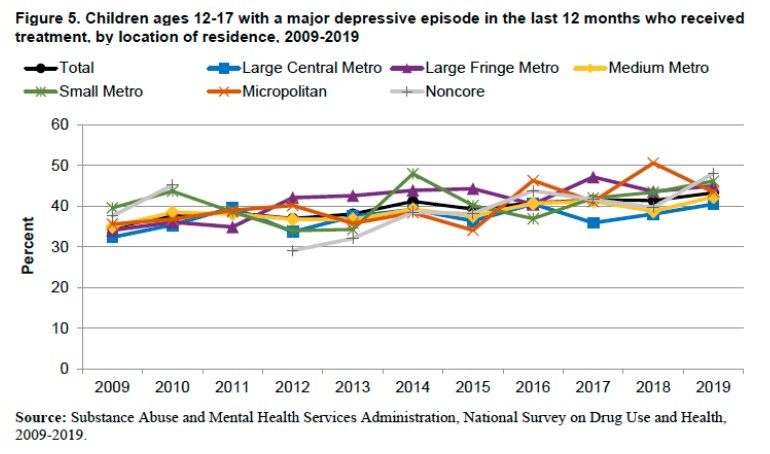
Approximately 1 in 4 American adults are living with a serious mental illness. Of 10 high-income countries, the U.S. suffers from the second-highest burden of adult mental health needs as well as the highest suicide rate [9], which has risen every year since 2000. As of 2024, nearly 7 million Americans aged 65 and older had been diagnosed with Alzheimer’s dementia, and that number is expected to double by 2050 [10].
These grim statistics do not include the countless individuals who suffer in silence due to common obstacles to diagnosis such as stigma-related reluctance to seek care and widespread shortages of mental health services [11].
Mental health disorders, especially if untreated, are associated with absenteeism, substance abuse, suicidal behaviors, and many other negative outcomes in children [12] and adults, placing a heavy burden on individuals, families, communities, and the nation [13].
A 2024 Yale University study found that mental illness costs the U.S. economy $282 billion dollars per year [14].
TREATMENT GAPS
For approximately 75 years, psychotropic medications intended primarily to address neurotransmitter dysfunction (aka “chemical imbalances”) have been the mainstay of medical treatment for mental health disorders. However, since there are no clinical tests capable of measuring brain neurotransmitter activity and no biomarkers for any mental health disorder, psychiatric care is guided largely by subjective diagnoses and trial-and-error medication decisions.
In 2019, 8.4% of all American children aged 5-17 were prescribed stimulants, antidepressants, anxiety medications, antipsychotics and/or mood stabilizers [15]. In 2020, 16.5% of all American adults were prescribed at least one psychotropic medication [16].
Although neurotransmitter system dysfunction is observed in many mental illnesses, psychotropic medication failure rates are high, therefore other factors must be at play.
- ADHD medications are ineffective in 20-40% of children [17].
- Approximately 50% of people with depression respond to medications targeting serotonin dysfunction (SSRIs) but this is only 10% better than placebo [18].
- Approximately one-third of people with bipolar disorder respond to mood stabilizers [19], but nearly half of them will continue to experience recurrent mood episodes despite continuing treatment [20].
- One-quarter of people with serious mental illnesses improve in response to antipsychotic medications (about twice as many as improve with placebo alone) [21]. However, metabolic and other undesirable side effects drive 74% to discontinue those medicines within 18 months, contributing to high hospitalization and relapse rates [22].
Psychotropic medication use in children and adolescents remains controversial due to concerns about safety and side effects; some of the most problematic risks being moodiness, restlessness, sedation, high glucose levels (and other signs of metabolic dysfunction), stunting of growth, and suicidal ideation [23].
This current standard of care requires high-touch, trial-and-error, biologically blind, long-term dependence on expensive specialist visits and medications that can contribute to mental and physical health problems.
DIETARY DRIVERS OF POOR MENTAL HEALTH
To turn the tide of our national mental health crisis, we must go beyond the neurotransmitter theory of mental illness to target the more recently identified (and more impactful) drivers of brain malfunction: inflammation, oxidative stress, and insulin resistance [24].
The steady rise in mental health disorders across all age groups in recent decades strongly suggests that environmental factors related to our rapidly changing modern lifestyle may be largely to blame—and the deterioration in the quality of the American diet is a logical suspect.
For more than fifty years, whole foods like meat, vegetables, eggs, nuts, fruit, and fish have gradually been replaced with ultra-processed foods, which now make up more than 60% of the American diet, outpacing most other nations around the world [25].
The staple ingredients of ultra-processed foods are refined carbohydrates (like sugars, flours, and cereal products) and refined “vegetable” oils such as soybean oil—powerful promoters of the inflammation, oxidative stress, and insulin resistance that pave the path to chronic mental (and physical) disorders.
- Many vegetable oils are unnaturally high in linoleic acid, an omega-6 fatty acid that can contribute to inflammation and promote oxidative stress [26].
- Refined carbohydrates promote steep spikes in blood glucose that trigger waves of inflammation and oxidative stress throughout the brain and body [27]. These in turn destabilize multiple neurotransmitter systems including serotonin, dopamine, and glutamate—high levels of which are toxic and place the brain in metabolic overdrive [28].
- High blood glucose levels promote high blood insulin levels, leading many organs to become insulin resistant. As the brain becomes more insulin resistant, it becomes increasingly difficult for insulin to enter the brain, where it is needed to help neurons convert glucose into energy [29]. The resulting constriction of the brain’s energy supply (cerebral glucose hypometabolism) sets the stage for widespread brain malfunction.
Insulin resistance and related metabolic dysfunction are associated with many mental health disorders across the lifespan, with the strongest examples being:
- People with glucose levels in the prediabetes range are almost 3 times more likely to develop major depression [30].
- People with newly diagnosed bipolar disorder or schizophrenia are more than 3 times as likely to have insulin resistance [31].
- More than 80% of people with Alzheimer’s disease (aka “type 3 diabetes”) have insulin resistance, which is a causal factor in most cases [32].
Current U.S. dietary guidelines endanger mental health by explicitly recommending the inclusion of refined carbohydrates and vegetable oils, and by promoting high-carbohydrate dietary patterns to everyone despite the fact that the vast majority of Americans have one or more signs of insulin resistance [33] and can no longer safely tolerate a high carbohydrate diet.
HOPE IS ON THE MENU: NEW TREATMENT OPTIONS
A new and rapidly growing body of research is demonstrating that dietary interventions can improve outcomes across a wide range of psychiatric diagnoses, sometimes quite substantially.
Eating patterns that improve dietary quality by emphasizing whole foods and limiting ultra-processed foods yield promising results in most clinical trials:
- Elimination diets: Multiple studies find that up to 60% of children with ADHD placed on very simple “few foods” diets (comprised mainly of whole foods and free of common food sensitivity culprits such as wheat and dairy) see substantial improvement in symptoms within several weeks [34].
- DASH diet: One RCT noted modest improvements in children with ADHD on the DASH diet (higher in fruits and vegetables, lower in simple sugars and dairy fat) as compared to a typical low-quality diet [35].
- Mediterranean diet: 5 RCTs have found that symptoms of moderate to severe major depression improved substantially in adults following a Mediterranean diet (which discourages refined carbohydrates and fast foods) compared to a typical low-quality diet [36].
- MIND diet: A 3-year RCT in adults at high risk for cognitive decline failed to document any difference in cognitive tests or MRI findings between a calorie-restricted MIND diet (a modified Mediterranean pattern) and a calorie-restricted low-fat diet [37].
Very low-carbohydrate ketogenic diets lower glucose and insulin levels, allowing the body to burn fat and generate ketones that the brain can use as a supplemental fuel source, bridging the glucose energy gaps associated with insulin resistance. Ketogenic diets also reduce the damaging inflammation and oxidative stress that destabilize brain chemistry and damage brain architecture.[38] A rapidly growing body of research has begun to document the safety and utility of ketogenic diets in a variety of mental health disorders.
- Autism spectrum disorder: 3 small studies (including 1 RCT), noted improvements in some symptoms of ASD in children [39].
- Anorexia: A small pilot trial of 5 individuals showed significant improvements in symptom severity.
- Alcohol dependence:1 RCT of adults hospitalized for management of alcohol withdrawal documented fewer cravings for alcohol and a 50% reduction in medication requirement [40].
- Cognitive decline: Several pilot studies of low-carbohydrate diets in mild cognitive impairment and Alzheimer’s disease note small improvements in cognitive testing [41]. An RCT comparing a ketogenic diet to a low-fat diet in mild Alzheimer’s disease documented significant improvement in daily function and quality of life [42].
- Serious mental illness: Hospitalized adults with treatment-resistant major depression, bipolar disorder, or schizophrenia and poor metabolic health improved substantially on a ketogenic diet—most lost weight, all aspects of metabolic health improved, 43% achieved clinical remission, and 64% left the hospital on less psychiatric medication. The magnitude of mental health symptom improvement was 7 to 10 times greater than trials of antidepressant and antipsychotic medications produced [43].
- Bipolar disorder: In adults with bipolar disorder, the ketogenic diet led to substantial reductions in brain glutamate levels (which tend to be elevated in bipolar disorder), and the higher blood ketone levels were, the better their mood, energy, anxiety, and impulsivity symptoms were [44].
- Serious mental illness: 79% of adults with bipolar disorder or schizophrenia and co-existing metabolic dysfunction achieved clinically meaningful improvement in psychiatric symptoms after 8 weeks on a ketogenic diet [45].
- Depression in college students: A study of ketogenic diet for depression in college students at The Ohio State University has recently been completed. Results are pending publication, but preliminary data demonstrates improvement in body-mass index and depressive symptoms for all 17 participants.
Larger, more rigorous clinical trials are underway around the world exploring the effect of ketogenic diets on all of the above conditions as well as in adult ADHD, childhood bipolar disorder, and anorexia nervosa [46].
The ketogenic diet is demonstrating its potential to safely and substantially improve both metabolic and mental health outcomes (sometimes reducing medication requirements) across a diversity of mental health disorders—including many “treatment-resistant” cases, and even disorders for which medications do not exist (ASD) or offer little hope (Alzheimer’s disease).
CALL TO ACTION
The United States has the opportunity to lead the world in establishing an innovative new standard of care for mental health disorders.
Everyone with a mental health disorder deserves a metabolic evaluation that includes testing for signs of insulin resistance, which are simple, inexpensive, and widely available.
Everyone with a mental health disorder deserves to know that insulin resistance is a major risk factor that can be addressed with lifestyle changes, one of the most effective of which is the ketogenic diet.
Everyone with a mental health disorder deserves to know that remission is possible, and therefore worth pursuing—even in severe, chronic, “treatment-resistant” mental illnesses.
The teaching of the biology of human nutrition and metabolism should be required in federally funded school systems.
Americans deserve to know that well-formulated, medically supervised, low-carbohydrate, high-fat dietary patterns are safe. Myths that stand in the way of acceptance of these metabolically healthy dietary patterns need to be effectively dismissed and replaced with biological truths:
- Human beings have no requirement for dietary carbohydrates because our bodies can make all the glucose we need out of protein and fat. Dietary carbohydrate is therefore entirely optional.
- There is no evidence that grains—even whole grains—are required or healthy for humans.
- Meat, seafood, poultry, and eggs are the safest most nutritious whole foods available to humans.
- Vegan diets are biologically inappropriate for all humans and dangerous for infants, children, teens, and while pregnant or breastfeeding.
The recommended eating patterns in the U.S. Dietary Guidelines do not align with these truths. To ensure the USDA Dietary Guidelines are grounded in biology rather than ideology, we must raise the standard of evidence upon which they are based—first and foremost by strictly excluding all nutrition epidemiology studies that assess people’s eating habits through unscientific food frequency questionnaires.
Americans deserve to have biologically accurate information about nutrition so they can have the freedom to make their own informed choices about what to eat.
Cutting-edge research is revealing that nutrition matters a great deal to mental health. If we can re-educate the public about human nutrition, decrease ultra-processed food consumption, and create new U.S. Dietary Guidelines that support health rather than endanger it, we can shift the standard of care in psychiatry from a chronic disease management paradigm to a paradigm centered around common-sense preventions and lifestyle. Adopting a food-first approach to mental illnesses of all kinds offers a safer, more empowering, and more hopeful way forward.
Dr. Georgia Ede, a Harvard-trained psychiatrist with over two decades of experience, brings in the new age of mental health treatment through nutritional and metabolic psychiatry, earning global recognition with her pioneering ketogenic diet research and bestselling book, Change Your Diet, Change Your Mind.
Article Reference: A Metabolic and Nutritional Approach to Mental Health – ReferencesRelated topics

USDA Dietary Guidelines for Americans


Corporate America