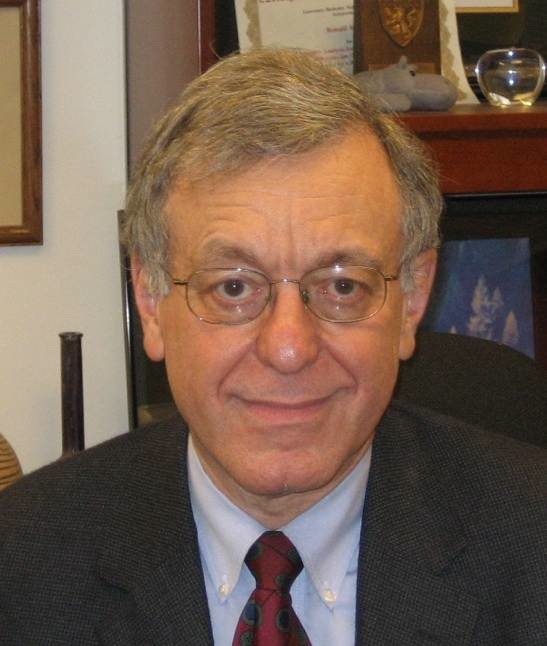
Ronald Krauss
Dr. Krauss received his undergraduate and medical degrees from Harvard University with honors and served his internship and residency in internal medicine on the Harvard Medical Service of Boston City Hospital. He then joined the NHLBI Molecular Disease Branch in Bethesda, MD, first as Clinical Associate and then as Senior Investigator. He later moved to California, where he established a laboratory at Lawrence Berkeley Laboratory and subsequently took faculty positions at UC Berkeley, Children’s Hospital Oakland Research Institute, and UCSF. Dr. Krauss is board-certified in internal medicine, endocrinology and metabolism, and lipidology, and is a member of the American Society for Clinical Investigation, a Fellow of the American Society of Nutrition, the American Heart Association (AHA), and the National Lipid Association, and a Distinguished Fellow of the International Atherosclerosis Society.
Dr. Krauss was a member of the AHA National Board of Directors and the U.S. National Cholesterol Education Program Expert Panel and was founding Chair of the AHA Council on Lifestyle and Cardiometabolic Health. Dr. Krauss has also served on both the Committee on Dietary Recommended Intakes for Macronutrients and the Committee on Biomarkers of Chronic Disease of the National Academy of Medicine. Among his awards are the AHA Scientific Councils Distinguished Achievement Award, the AHA National Award of Meritorious Achievement, the Centrum Center for Nutrition Science Award of the American Society for Nutrition, and the Distinguished Leader in Insulin Resistance Award from the International Committee for Insulin Resistance. In addition, he has been the Robert I. Levy Lecturer of the AHA, the Edwin Bierman Lecturer of the American Diabetes Association, and the Margaret Albrink Lecturer at West Virginia University School of Medicine.
Dr. Krauss has served on editorial boards of a number of journals and has been Associate Editor of Obesity, the Journal of Lipid Research, and the Journal of Clinical Lipidology. He has published over 500 research articles and reviews on metabolic, dietary, drug, and genetic effects on plasma lipoproteins and risk of coronary artery disease, with more than 195,000 citations and an h-index of 163. Among his accomplishments are the identification of the metabolic triad constituting atherogenic dyslipidemia (high triglyceride, low HDL, and increased small, dense LDL particles), a highly prevalent trait associated with abdominal adiposity, insulin resistance, and increased risk of both cardiovascular disease and type 2 diabetes, and the development and application of methodologies for lipoprotein particle analysis that have been widely used in clinical practice.
Awards
- 1961 Detur Prize, Harvard College
- 1964 Phi Beta Kappa. Harvard College
- 1968 Alpha Omega Alpha, Harvard Medical School
- 1986 American Society of Clinical Investigation
- 2001 American Heart Association Scientific Councils Distinguished Achievement Award
- 2001 American Heart Association Council on Arteriosclerosis, Thrombosis and Vascular Biology Special Recognition Award
- 2003 Fellow, American Heart Association
- 2004 Robert I. Levy Endowed Lecture in Lipid Metabolism, American Heart Association
- 2005 R&D 100 Award
- 2005 Who’s Who in the World
- 2006 Distinguished Fellow, International Atherosclerosis Society
- 2008 Fellow, American Society for Nutrition
- 2009 Guide to America’s Top Physicians
- 2010 Centrum Center for Nutrition Science Award, American Society for Nutrition
- 2011 American Heart Association Heart of Gold Ball Research Honoree
- 2011 Distinguished Leader in Insulin Resistance Award, International Committee for Insulin Resistance
- 2012 Margaret J. Albrink Endowed Lecture, West Virginia University School of Medicine
- 2012 Edwin Bierman Lecture Award, American Diabetes Association
- 2014 American Heart Association Award of Meritorious Achievement (National)
- 2023 Michael B. Clearfield Excellence in Research Award, Touro University California
Number of Publications
590
Years of Clinical Experience & Estimated Number of Patients Treated
52 years, thousands of patients
More experts
Bret Scher,
MD, FACC

Maya E. Maroto,
EdD, MPH, RD
Tracy Gertler,
MD, PhD