


by Karen Jerome-Zapadka, MD, DABOM, MHP
Dr. Karen Jerome-Zapadka, a board-certified gastroenterologist and obesity medicine specialist, is transforming metabolic health and combating fatty liver disease through innovative therapeutic carbohydrate reduction programs through her comprehensive obesity program, leadership in multidisciplinary nutrition committees, and tireless advocacy for patient education and awareness.
Introduction
Metabolic Dysfunction-Associated Steatotic Liver Disease (MASLD), formerly known as Non-Alcoholic Fatty Liver Disease (NAFLD), is the most common cause of chronic liver disease in the world. This affects 25-30% of the world’s population, including over 80 million people in our nation. (1-5) Though there are reports dating to the 1800’s, it was 1962 when “hepatitis of the fatty liver” was described, (6) 1980 when the term Non-Alcoholic Steatohepatitis (NASH) was introduced. (7) and 1986 when the term “nonalcoholic fatty liver disease” was first introduced. (8) It was initially believed this was a benign condition, but in the 1990s it was recognized that NASH was itself a serious disease with associated morbidity and mortality. In this short span of time, in parallel with the epidemics of obesity, insulin resistance, and metabolic syndrome, cirrhosis due to this disease has become the leading indication for liver transplantation in women and those >65 years of age, and is on par with alcohol as the leading indication overall (9-11).
What Is It?
MASLD is defined by fat in the liver affecting at least 5% of the liver cells, after other causes of liver fat have been ruled out. MASLD can be divided into subtypes that range from simple fat in the liver to a more advanced disease known as Metabolic Dysfunction Associated Steatohepatitis or MASH, where this is not only fat in the liver cells, but also liver cell damage and liver inflammation. This damage and inflammation can lead to scarring and eventual cirrhosis of the liver with liver failure.
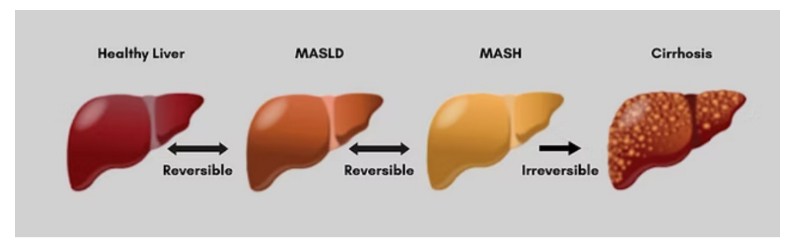
The recent name change to MASLD (99) reflects the fact that this condition is tied to metabolic syndrome and insulin resistance. Insulin resistance is nearly universal in MASLD in the liver, adipose cells, and muscle. It is found at higher rates in patients. with components of metabolic syndrome (type 2 diabetes-78%, hypertension, high triglycerides, low HDL and central obesity-90% in the severely obese). (10-12)
MASLD, as with metabolic syndrome, should be considered part of a systemic disease process that includes risk for cardiovascular disease, now the leading cause of death in these patients, type two diabetes, hypertension, obesity, chronic kidney disease and obstructive sleep apnea. (12-83) People with MASLD and metabolic syndrome have a higher overall mortality rate, increased cirrhosis and liver related deaths, and higher rates of liver cancer. (4, 84) Non-liver cancer deaths (especially gastrointestinal cancers such as esophagus, stomach, pancreas, and colon, but also breast and gynecologic cancers) are among the top three causes of death in the MASLD population.(85 86)
The Scope of the Problem/Disease Burden
From the American Association for the Study of Liver Disease (AASLD) 2023 Practice Guidelines(87): the prevalence of NAFLD and NASH is rising worldwide in parallel with increases in the prevalence of obesity and metabolic comorbid disease (insulin resistance, dyslipidemia, central obesity, and hypertension). The prevalence of NASH/MASH in the general population is challenging to determine with certainty; however, the more advanced form-NASH/MASH was identified in 14% of asymptomatic patients undergoing colon cancer screening. (88) This study also highlights that since the publication of a prior prospective prevalence study, the prevalence of clinically significant fibrosis (stage 2 or higher fibrosis) has increased >2-fold. This is supported by the projected rise in NAFLD prevalence by 2030, when patients with advanced hepatic fibrosis, defined as bridging fibrosis (F3) or compensated cirrhosis (F4), will increase disproportionately, mirroring the projected doubling of NASH. As such, the incidence of hepatic decompensation, HCC (liver cancer), and death related to NASH cirrhosis are likewise expected to increase 2- to 3-fold by 2030. (89) In 2020 nearly 33.7% of US adults (close to 86 million) were affected by MASLD. 5.8% of US adults (14.9 million) were affected by MASH, (with 6.7 million affected by MASH with significant fibrosis).
In a simulation model (90), by 2050, the number of adult MASLD cases will increase from 33.7% to 41.4% close to 121.9 million adults! Cases of MASH would increase from 14.9 million (5.8% of US adults) to 23.2 million (7.9% of US adults). Cases of MASH with advanced fibrosis would increase from 6.7 to 11.7 million. Cases of liver cancer would rise from 11,483 to 22,440 cases per year. Cases of liver transplant would increase from 1,717 to 6720 per year. Liver related mortality would increase from 30,500 deaths (1.0% of all cause deaths in adults) to 95,300 deaths (2.4%) MASLD can also be seen in 4.1% of the lean population again, associated with metabolic comorbidities and visceral adiposity. Another special population, pregnant women, were found to have hepatic steatosis in 14%, rising to 20% in women with a BMI of 30 or greater. This is associated with increased complications including preterm birth, postpartum bleeding and hypertensive complications. These should be considered high risk pregnancies. (104)
This predicted crisis of burden of disease is coupled with predictions of physician shortages. In 2023 AMA President Jesse Ehrenfeld MD described it as an urgent crisis with a projected shortfall of 86,000 physicians by 2036. Beyond that, are medical schools training future physicians in the prevention and management of these chronic diseases? Who will be able to care for these patients?
Financial Burden
In his report, Burden of illness and economic impact of nonalcoholic steatohepatitis (NASH) in the United States (91) according to the prevalence of obesity, Dr. Zobair Younossi estimates costs for NASH to be $175 billion over the next 2 decades. This estimate does not include the costs of the newly approved drugs for MASH with fibrosis. This is a call to action to providers, payers, policy makers and other stakeholders to address this growing crisis and allocate resources to address the disease more aggressively, as well as allocate resources to implement appropriate preventive measures.
How Do You Get a Fatty Liver?
MASLD has multiple metabolic and genetic factors contributing to its progression. Gut dysbiosis and sedentary behavior also contribute. However, there are important pathways leading to accumulation of liver fat, (92-98) all involving excess carbohydrates (sugar and starches) above a person’s tolerance, a driver of insulin resistance:
- The fructose molecule in sugar is considered a leading driver of metabolic syndrome and MASLD. Never before in human history have we seen this level of fructose consumption. Fructose in excess is a toxin to the mitochondria (the powerhouse and driver of energy) in the liver cells. A damaged mitochondria reduces the cells’ ability to produce energy and burn fat, promoting more fat build up in the liver cell and a reduction in energy production in the cells. Fructose increases fat building in the liver (de novo lipogenesis). Fructose can also be produced in the body during periods of eating excess carbohydrates, through a process called the polyol pathway.
- Excessive carbohydrates lead to elevated insulin levels, both of which promote fat building in the liver- de novo lipogenesis.
- Elevated insulin levels (brought about by excessive carbohydrate intake) also lead to growth of peripheral fat cells. As these cells become larger and insulin resistant, they begin to leak out their fat in the form of free fatty acids that travel throughout the body (ectopic fat) including to the liver, further promoting fat building in the liver.
MASLD in Children: A Crisis Unfolding
The rates of obesity in children have tripled since the 1960’s from 5% to 19.7%. This increase is occurring in all age groups, but especially in adolescents where it is estimated at 20.6%.(100) This correlates with an increase in other comorbidities including hypertension, pre- and type two diabetes, and MASLD. This increase is multifaceted with a range of factors including environmental/food availability, genetics, epigenetics, societal, financial, psychological and endocrinological influences. In addition to obesity and waist circumference, other factors play a role including age, sex, race and ethnicity. Adolescents, males, Mexican-Americans, those with high waist circumference and BMI > than the 85% percentile are at greater risk to have MASLD.(101-103)
Incidence in children
In the general pediatric population, the estimated prevalence of MASLD is 5-11%. In the obese pediatric population this estimate increases to 30-50%. In children with MASLD, reports vary with estimates of MASH (steatohepatitis) from 23-84%. (101-103) MASLD is even reported in newborns.
In one study, 33 stillborn infants of mothers with diabetes were compared to 48 controls. There was a significant difference in hepatic steatosis: 78.8% in the case group versus 16.7% in controls (P < .001). The severity was also greater in the case group. The authors conclude that there is a significant positive association between fetal hepatic steatosis and maternal diabetes. (105). This sets a child up for a lifetime of illness and early mortality through no fault of their own.
Long Term Outcomes
There are only a few long-term natural history studies on pediatric MASLD. A Swedish cohort study spanning 1966-2017 followed 718 pediatric and young adult patients with NAFLD confirmed by biopsy. These young patients saw higher risks for cancer-, liver-, and cardiometabolic mortality compared to matched controls. (106) Another study showed that with standard of care lifestyle advice, one third of children with MASLD showed progression of the disease in just 2 years. (107) Indeed, according to the United Network of Organ Sharing (UNOS) database, of all transplants performed in adolescents and young adults between 2015 and 2020, 7% were for the indication of MASH/Cryptogenic cirrhosis.(108)
Gaps in Care
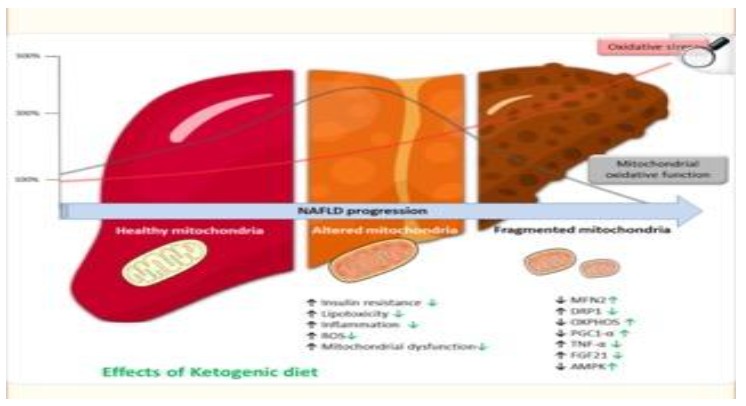
In Xanthakos’ 2020 study, (107) he documented that with standard of care lifestyle advice every three months, one third of children with MASLD showed progression of the disease in just 2 years, highlighting the insufficiency of this approach. This begs the question-are we giving the wrong advice? From a nutritional standpoint, other than avoidance of sugar sweetened beverages and weight loss, standard of care in guidelines remains: NASPGHAN (109)-“consumption of a healthy well balanced diet,” and AASLD-(87) “Although the benefits of the Mediterranean diet over other dietary approaches in small randomized trials is debated, it is sustainable and has cardiovascular benefits”. Other miscellaneous sources recommend against saturated fat, and to minimize red meat and animal- based proteins, toward more plant- based proteins, without the rigorous science to support this. (There is no approved medication for the pediatric population and this report will not discuss bariatric surgery, though references are provided.) This contrasts with a large body of evidence (110-127) supporting the consideration of low-carbohydrate diets, and especially ketogenic diets in the treatment not only of MASLD, (some showing quite rapid improvement), but also in the reversal of type two diabetes, metabolic syndrome and improvement of obesity, all linked to MASLD. Paoli and Cerullo’s review, (128) found that a ketogenic diet inducing “physiological ketosis” stimulated the activation of several key factors involved in liver-protective activities that alleviated oxidative stress and damage, improved the inflammatory response and restored mitochondrial function, globally improving liver function. More research in this area is needed.
Finally, many MASLD patients are lean or non-obese and these patients have not been studied well.
A Call to Action
First we must develop a governmental campaign to educate the public and health care providers (HCPs) about this disease, its link to insulin resistance, and its dangers, including risks of cirrhosis, multiple cancers, cardiovascular disease, diabetes, perinatal complications, early mortality and need for liver transplantation. We need a massive educational campaign about the role of fructose in sugar, and excess carbohydrates above a person’s tolerance and their contribution to insulin resistance, metabolic syndrome and MASLD.
Second, we must have our nation undergo routine screening, as we do for other diseases. The public and HCPs must be educated on who and how to screen. The clinical practice guidelines from the North American Society for Pediatric Gastroenterology, Hepatology and Nutrition (NASPGHAN), as well as guidelines from the AASLD, AGA and other specialty organizations offer recommendations for screening in both the pediatric and adult population. HCPs must understand non-invasive testing (NITs) and non-invasive liver disease assessment (NILDA) including blood work and imaging studies/liver scanning to directly measure fat in the liver and assess the degree of scarring by a method called elastography.(87, 109) (It is of the utmost importance for primary care providers to identify patients with advanced fibrosis (scarring) who should be referred to a specialist, due to their higher rate of liver-related mortality and their eligibility for newly approved drug therapy (Resmetirom and Semaglutide in adults). (129, 130)
Primary care providers must also be trained to care for patients with less severe MASLD due to the shortage of specialists and estimates of the increasing number of patients with this disease.
Third, as outlined above, there is a tremendous financial burden on our nation from this disease. This is a call to action to providers, payers, policy makers and other stakeholders to address this growing crisis and allocate resources to address the disease more aggressively, as well as allocate resources to implement appropriate preventive measures.
Finally, while there are many factors contributing to this disease, it is primarily driven by poor nutrition. There are many nutritional patterns recommended (Mediterranean, low fat, plant -based, calorie restricted, low-carbohydrate). Funding is needed to perform rigorous scientific studies to compare these patterns to nutritional ketosis given the studies done to date showing its benefit, not just with all features of metabolic syndrome and insulin resistance, but with intrinsic liver health as well (128).
References
- Estes C, Razavi H, Loomba R, Younossi Z, Sanyal AJ. Modeling the epidemic of nonalcoholic fatty liver disease demonstrates an exponential increase in burden of disease. Hepatology. 2018;67:123–33. [DOI] [PMC free article] [PubMed] [Google Scholar]
- Le P, Chaitoff A, Rothberg MB, McCullough A, Gupta NM, Alkhouri N. Population-based trends in prevalence of non-alcoholic fatty liver disease in US adults with type 2 diabetes. Clin Gastroenterol Hepatol. 2019;17:2377–78. [DOI] [PubMed] [Google Scholar]
- Browning JD, Szczepaniak LS, Dobbins R, Nuremberg P, Horton JD, Cohen JC, et al. Prevalence of hepatic steatosis in an urban population in the United States: impact of ethnicity. Hepatology. 2004;40:1387–95. [DOI] [PubMed] [Google Scholar]
- Younossi ZM, Koenig AB, Abdelatif D, Fazel Y, Henry L, Wymer M. Global epidemiology of nonalcoholic fatty liver disease—meta-analytic assessment of prevalence, incidence, and outcomes. Hepatology. 2016;64:73–84. [DOI] [PubMed] [Google Scholar]
- Le MH, Devaki P, Ha NB, Jun DW, Te HS, Cheung RC, et al. Prevalence of non-alcoholic fatty liver disease and risk factors for advanced fibrosis and mortality in the United States. PLoS One. 2017;12:e0173499. [DOI] [PMC free article] [PubMed] [Google Scholar]
- Thaler, H. The fatty liver and its pathogenetic relation to liver cirrhosis. Virchows Archiv fur Pathologische Anatomie und Physiologie und fur Klinische Medizin 335, 180-210 (1962).
- Ludwig, J., Viggiano, T.R., McGill, D.B.,and Oh, B.J.,Nonalcoholic steatohepatitis: Mayo Clinic experience with a hitherto unnamed disease. Mayo Clinic Proceedings 55, 434-438 (1980)
- Schaffner, F. and Thaler, H. Nonalcoholic fatty liver disease. Progress in Liver Diseases 8, 283-298 (1986)
- Noureddin M, Vipani A, Bresee C, Todo T, Kim IK, Alkhouri N, et al. NASH leading cause of liver transplant in women: updated analysis of indications for liver transplant and ethnic and gender variances. Am J Gastroenterol. 2018;113:1649–59. [DOI] [PMC free article] [PubMed] [Google Scholar]
- Wong RJ, Singal AK. Trends in liver disease etiology among adults awaiting liver transplantation in the United States, 2014–2019. JAMA Netw Open. 2020;3:e1920294. [DOI] [PubMed] [Google Scholar]
- Younossi ZM, Stepanova M, Ong J, Trimble G, AlQahtani S, Younossi I, et al. Nonalcoholic steatohepatitis is the most rapidly increasing indication for liver transplantation in the United States. Clin Gastroenterol Hepatol. 2021;19:580–9. [DOI] [PubMed]
- Bril F, Barb D, Portillo-Sanchez P, Biernacki D, Lomonaco R, Suman A, et al. Metabolic and histological implications of intrahepatic triglyceride content in nonalcoholic fatty liver disease. Hepatology. 2017;65:1132–44. [DOI] [PubMed] [Google Scholar]
- Hardy T, Oakley F, Anstee QM, Day CP. Nonalcoholic fatty liver disease: pathogenesis and disease spectrum. Annu Rev Pathol. 2016;11:451–96. [DOI] [PubMed] [Google Scholar
- Kahn CR, Wang G, Lee KY. Altered adipose tissue and adipocyte function in the pathogenesis of metabolic syndrome. J Clin Invest. 2019;129:3990–4000. [DOI] [PMC free article] [PubMed] [Google Scholar]
- Bril F, Barb D, Portillo-Sanchez P, Biernacki D, Lomonaco R, Suman A, et al. Metabolic and histological implications of intrahepatic triglyceride content in nonalcoholic fatty liver disease. Hepatology. 2017;65:1132–44. [DOI] [PubMed] [Google Scholar]
- Loomba R, Friedman SL, Shulman GI. Mechanisms and disease consequences of nonalcoholic fatty liver disease. Cell. 2021;184:2537–64. [DOI] [PubMed] [Google Scholar]
- Petersen MC, Vatner DF, Shulman GI. Regulation of hepatic glucose metabolism in health and disease. Nat Rev Endocrinol. 2017;13:572–87. [DOI] [PMC free article] [PubMed] [Google Scholar]
- Marchesini G, Bugianesi E, Forlani G, Cerrelli F, Lenzi M, Manini R, et al. Nonalcoholic fatty liver, steatohepatitis, and the metabolic syndrome. Hepatology. 2003;37:917–23. [DOI] [PubMed] [Google Scholar]
- Jinjuvadia R, Antaki F, Lohia P, Liangpunsakul S. The association between nonalcoholic fatty liver disease and metabolic abnormalities in the United States population. J Clin Gastroenterol. 2017;51:160–6. [DOI] [PMC free article] [PubMed] [Google Scholar]
- Golabi P, Otgonsuren M, de Avila L, Sayiner M, Rafiq N, Younossi ZM. Components of metabolic syndrome increase the risk of mortality in nonalcoholic fatty liver disease (NAFLD). Medicine. 2018;97:e0214. [DOI] [PMC free article] [PubMed] [Google Scholar]
- Stepanova M, Rafiq N, Younossi ZM. Components of metabolic syndrome are independent predictors of mortality in patients with chronic liver disease: a population-based study. Gut. 2010;59:1410–5. [DOI] [PubMed] [Google Scholar]
- Kim D, Konyn P, Sandhu KK, Dennis BB, Cheung AC, Ahmed A. Metabolic dysfunction-associated fatty liver disease is associated with increased all-cause mortality in the United States. J Hepatol. 2021;75:1284–91. [DOI] [PubMed] [Google Scholar]
- Meex RCR, Watt MJ. Hepatokines: linking nonalcoholic fatty liver disease and insulin resistance. Nat Rev Endocrinol. 2017;13:509–20. [DOI] [PubMed] [Google Scholar]
- Sabio G, Das M, Mora A, Zhang Z, Jun JY, Ko HJ, et al. A stress signaling pathway in adipose tissue regulates hepatic insulin resistance. Science. 2008;322:1539–43. [DOI] [PMC free article] [PubMed] [Google Scholar]
- Chakravarthy MV, Siddiqui MS, Forsgren MF, Sanyal AJ. Harnessing muscle–liver crosstalk to treat nonalcoholic steatohepatitis. Front Endocrinol. 2020;11:592373. [DOI] [PMC free article] [PubMed] [Google Scholar]
- Loomis AK, Kabadi S, Preiss D, Hyde C, Bonato V, Louis M, et al. Body mass index and risk of nonalcoholic fatty liver disease: two electronic health record prospective studies. J Clin Endocrinol Metab. 2016;101:945–52. [DOI] [PMC free article] [PubMed] [Google Scholar]
- Fabbrini E, Sullivan S, Klein S. Obesity and nonalcoholic fatty liver disease: biochemical, metabolic, and clinical implications. Hepatology. 2010;51:679–89. [DOI] [PMC free article] [PubMed] [Google Scholar]
- Lonardo A, Bellentani S, Argo CK, Ballestri S, Byrne CD, Caldwell SH, et al. Epidemiological modifiers of non-alcoholic fatty liver disease: focus on high-risk groups. Dig Liver Dis. 2015;47:997–1006. [DOI] [PubMed] [Google Scholar]
- Katsuki A, Sumida Y, Urakawa H, Gabazza EC, Murashima S, Maruyama N, et al. Increased visceral fat and serum levels of triglyceride are associated with insulin resistance in Japanese metabolically obese, normal weight subjects with normal glucose tolerance. Diabetes Care. 2003;26:2341–4. [DOI] [PubMed] [Google Scholar]
- Conus F, Allison DB, Rabasa-Lhoret R, St-Onge M, St-Pierre DH, Tremblay-Lebeau A, et al. Metabolic and behavioral characteristics of metabolically obese but normal-weight women. J Clin Endocrinol Metab. 2004;89:5013–20. [DOI] [PubMed] [Google Scholar]
- van der Poorten D, Milner KL, Hui J, Hodge A, Trenell MI, Kench JG, et al. Visceral fat: a key mediator of steatohepatitis in metabolic liver disease. Hepatology. 2008;48:449–57. [DOI] [PubMed] [Google Scholar]
- Eguchi Y, Mizuta T, Sumida Y, Ishibashi E, Kitajima Y, Isoda H, et al. The pathological role of visceral fat accumulation in steatosis, inflammation, and progression of nonalcoholic fatty liver disease. J Gastroenterol. 2011;46(suppl 1):70–8. [DOI] [PubMed] [Google Scholar]
- Wajchenberg BL. Subcutaneous and visceral adipose tissue: their relation to the metabolic syndrome. Endocr Rev. 2000;21:697–738. [DOI] [PubMed] [Google Scholar]
- Tchernof A, Després JP. Pathophysiology of human visceral obesity: an update. Physiol Rev. 2013;93:359–404. [DOI] [PubMed] [Google Scholar]
- Yu SJ, Kim W, Kim D, Yoon JH, Lee K, Kim JH, et al. Visceral obesity predicts significant fibrosis in patients with nonalcoholic fatty liver disease. Medicine. 2015;94:e2159. [DOI] [PMC free article] [PubMed] [Google Scholar]
- Ruhl CE, Everhart JE. Determinants of the association of overweight with elevated serum alanine aminotransferase activity in the United States. Gastroenterology. 2003;124:71–9. [DOI] [PubMed] [Google Scholar]
- Gholam PM, Kotler DP, Flancbaum LJ. Liver pathology in morbidly obese patients undergoing Roux-en-Y gastric bypass surgery. Obes Surg. 2002;12:49–51. [DOI] [PubMed] [Google Scholar]
- Park BJ, Kim YJ, Kim DH, Kim W, Jung YJ, Yoon JH, et al. Visceral adipose tissue area is an independent risk factor for hepatic steatosis. J Gastroenterol Hepatol. 2008;23:900–7. [DOI] [PubMed] [Google Scholar]
- Hamaguchi M, Kojima T, Itoh Y, Harano Y, Fujii K, Nakajima T, et al. The severity of ultrasonographic findings in nonalcoholic fatty liver disease reflects the metabolic syndrome and visceral fat accumulation. Am J Gastroenterol. 2007;102:2708–15. [DOI] [PubMed] [Google Scholar]
- Kim D, Park BJ, Kim W, Jung Y, Kim Y, Yoon JW, et al. Visceral fat as a strong and independent risk factor of nonalcoholic fatty liver disease (abstract). J Hepatol. 2008;48:S1913. [Google Scholar]
- Kwok R, Choi KC, Wong GL, Zhang Y, Chan HL, Luk AO, et al. Screening diabetic patients for non-alcoholic fatty liver disease with controlled attenuation parameter and liver stiffness measurements: a prospective cohort study. Gut. 2016;65:1359–68. [DOI] [PubMed] [Google Scholar]
- Bazick J, Donithan M, Neuschwander-Tetri BA, Kleiner D, Brunt EM, Wilson L, et al. Clinical model for NASH and advanced fibrosis in adult patients with diabetes and NAFLD: guidelines for referral in NAFLD. Diabetes Care. 2015;38:1347–55. [DOI] [PMC free article] [PubMed] [Google Scholar]
- El-Serag HB, Hampel H, Javadi F. The association between diabetes and hepatocellular carcinoma: a systematic review of epidemiologic evidence. Clin Gastroenterol Hepatol. 2006;4:369–80. [DOI] [PubMed] [Google Scholar]
- Younossi ZM, Golabi P, de Avila L, Paik JM, Srishord M, Fukui N, et al. The global epidemiology of NAFLD and NASH in patients with type 2 diabetes: a systematic review and meta-analysis. J Hepatol. 2019;71:793–801. [DOI] [PubMed] [Google Scholar]
- Ajmera V, Cepin S, Tesfai K, Hofflich H, Cadman K, Lopez S, et al. A prospective study on the prevalence of NAFLD, advanced fibrosis, cirrhosis and hepatocellular carcinoma in people with type 2 diabetes. J Hepatol. 2023;78:471–78. [DOI] [PMC free article] [PubMed] [Google Scholar
- Donati G, Stagni B, Piscaglia F, Venturoli N, Morselli-Labate AM, Rasciti L, et al. Increased prevalence of fatty liver in arterial hypertensive patients with normal liver enzymes: role of insulin resistance. Gut. 2004;53:1020–3. [DOI] [PMC free article] [PubMed] [Google Scholar]
- Smits MM, Ioannou GN, Boyko EJ, Utzschneider KM. Non-alcoholic fatty liver disease as an independent manifestation of the metabolic syndrome: results of a US national survey in three ethnic groups. J Gastroenterol Hepatol. 2013;28:664–70. [DOI] [PubMed] [Google Scholar]
- Lonardo A, Nascimbeni F, Mantovani A, Targher G. Hypertension, diabetes, atherosclerosis and NASH: cause or consequence? J Hepatol. 2018;68:335–2. [DOI] [PubMed] [Google Scholar]
- Zhao YC, Zhao GJ, Chen Z, She ZG, Cai J, Li H. Nonalcoholic fatty liver disease: an emerging driver of hypertension. Hypertension. 2020;75:275–84. [DOI] [PubMed] [Google Scholar]
- Siddiqui MS, Fuchs M, Idowu MO, Luketic VA, Boyett S, Sargeant C, et al. Severity of nonalcoholic fatty liver disease and progression to cirrhosis are associated with atherogenic lipoprotein profile. Clin Gastroenterol Hepatol. 2015;13:1000–8. [DOI] [PMC free article] [PubMed] [Google Scholar]
- Patel S, Siddiqui MB, Roman JH, Zhang E, Lee E, Shen S, et al. Association between lipoprotein particles and atherosclerotic events in nonalcoholic fatty liver disease. Clin Gastroenterol Hepatol. 2021;19:2202–4. [DOI] [PMC free article] [PubMed] [Google Scholar]
- Corey KE, Wilson LA, Altinbas A, Yates KP, Kleiner DE, Chung RT, et al. Relationship between resolution of non-alcoholic steatohepatitis and changes in lipoprotein sub-fractions: a post-hoc analysis of the PIVENS trial. Aliment Pharmacol Ther. 2019;49:1205–3. [DOI] [PMC free article] [PubMed] [Google Scholar]
- Corey KE, Vuppalanchi R, Wilson LA, Cummings OW, Chalasani N. NASH CRN. NASH resolution is associated with improvements in HDL and triglyceride levels but not improvement in LDL or non-HDL-C levels. Aliment Pharmacol Ther. 2015;41:301–9. [DOI] [PMC free article] [PubMed] [Google Scholar]
- Mesarwi OA, Loomba R, Malhotra A. Obstructive sleep apnea, hypoxia, and nonalcoholic fatty liver disease. Am J Respir Crit Care Med. 2019;199:830–41. [DOI] [PMC free article] [PubMed] [Google Scholar]
- Corey KE, Misdraji J, Gelrud L, King LY, Zheng H, Malhotra A, et al. Obstructive sleep apnea is associated with nonalcoholic steatohepatitis and advanced liver histology. Dig Dis Sci. 2015;60:2523–8. [DOI] [PMC free article] [PubMed] [Google Scholar]
- Fu Y, Zhang N, Tang W, Bi Y, Zhu D, Chu X, et al. Chronic intermittent hypoxia contributes to non-alcoholic steatohepatitis progression in patients with obesity. Hepatol Int. 2022;16:824–34. [DOI] [PubMed] [Google Scholar]
- Landete P, Fernández-García CE, Aldave-Orzaiz B, Hernández-Olivo M, Acosta-Gutiérrez CM, Zamora-García E, et al. Increased oxygen desaturation time during sleep is a risk factor for NASH in patients with obstructive sleep apnea: a prospective cohort study. Front Med. 2022;9:808417. [DOI] [PMC free article] [PubMed] [Google Scholar]
- Tanné F, Gagnadoux F, Chazouillères O, Fleury B, Wendum D, Lasnier E, et al. Chronic liver injury during obstructive sleep apnea. Hepatology. 2005;41:1290–6. [DOI] [PubMed] [Google Scholar]
- Mishra P, Nugent C, Afendy A, Bai C, Bhatia P, Afendy M, et al. Apnoeic–hypopnoeic episodes during obstructive sleep apnoea are associated with histological nonalcoholic steatohepatitis. Liver Int. 2008;28:1080–6. [DOI] [PubMed] [Google Scholar]
- Asfari MM, Niyazi F, Lopez R, Dasarathy S, McCullough AJ. The association of nonalcoholic steatohepatitis and obstructive sleep apnea. Eur J Gastroenterol Hepatol. 2017;29:1380–4. [DOI] [PMC free article] [PubMed] [Google Scholar]
- Drager LF, Jun JC, Polotsky VY. Metabolic consequences of intermittent hypoxia: relevance to obstructive sleep apnea. Best Pract Res Clin Endocrinol Metab. 2010;24:843–51. [DOI] [PMC free article] [PubMed] [Google Scholar]
- Li J, Savransky V, Nanayakkara A, Smith PL, O’Donnell CP, Polotsky VY. Hyperlipidemia and lipid peroxidation are dependent on the severity of chronic intermittent hypoxia. J Appl Physiol. 2007;102:557–63. [DOI] [PubMed] [Google Scholar]
- Khalyfa A, Gozal D, Masa JF, Marin JM, Qiao Z, Corral J, et al. Sleep-disordered breathing, circulating exosomes, and insulin sensitivity in adipocytes. Int J Obes (Lond). 2018;42:1127–39. [DOI] [PMC free article] [PubMed] [Google Scholar]
- Xu H, Liang C, Zou J, Yi H, Guan J, Gu M, et al. Interaction between obstructive sleep apnea and short sleep duration on insulin resistance: a large-scale study. Respir Res. 2020;21:151. [DOI] [PMC free article] [PubMed] [Google Scholar]
- Polotsky VY, Patil SP, Savransky V, Laffan A, Fonti S, Frame LA, et al. Obstructive sleep apnea, insulin resistance, and steatohepatitis in severe obesity. Am J Respir Crit Care Med. 2009;179:228–34. [DOI] [PMC free article] [PubMed] [Google Scholar]
- Käräjämäki AJ, Pätsi OP, Savolainen M, Kesäniemi YA, Huikuri H, Ukkola O. Non-alcoholic fatty liver disease as a predictor of atrial fibrillation in middle-aged population (OPERA Study). PLoS One. 2015;10:e0142937. [DOI] [PMC free article] [PubMed] [Google Scholar]
- VanWagner LB, Wilcox JE, Colangelo LA, Lloyd-Jones DM, Carr JJ, Lima JA, et al. Association of nonalcoholic fatty liver disease with subclinical myocardial remodeling and dysfunction: a population-based study. Hepatology. 2015;62:773–83. [DOI] [PMC free article] [PubMed] [Google Scholar]
- Mantovani A, Rigamonti A, Bonapace S, Bolzan B, Pernigo M, Morani G, et al. Nonalcoholic fatty liver disease is associated with ventricular arrhythmias in patients with type 2 diabetes referred for clinically indicated 24-hour holter monitoring. Diabetes Care. 2016;39:1416–23. [DOI] [PubMed] [Google Scholar]
- Canada JM, Abbate A, Collen R, Billingsley H, Buckley LF, Carbone S, et al. Relation of hepatic fibrosis in nonalcoholic fatty liver disease to left ventricular diastolic function and exercise tolerance. Am J Cardiol. 2019;123:466–73. [DOI] [PMC free article] [PubMed] [Google Scholar]
- Targher G, Bertolini L, Padovani R, Zenari L, Zoppini G, Falezza G. Relation of nonalcoholic hepatic steatosis to early carotid atherosclerosis in healthy men: role of visceral fat accumulation. Diabetes Care. 2004;27:2498–500. [DOI] [PubMed] [Google Scholar]
- Sookoian S, Pirola CJ. Non-alcoholic fatty liver disease is strongly associated with carotid atherosclerosis: a systematic review. J Hepatol. 2008;49:600–7. [DOI] [PubMed] [Google Scholar]
- Bonapace S, Perseghin G, Molon G, Canali G, Bertolini L, Zoppini G, et al. Nonalcoholic fatty liver disease is associated with left ventricular diastolic dysfunction in patients with type 2 diabetes. Diabetes Care. 2012;35:389–95. [DOI] [PMC free article] [PubMed] [Google Scholar]
- Stepanova M, Younossi ZM. Independent association between nonalcoholic fatty liver disease and cardiovascular disease in the US population. Clin Gastroenterol Hepatol. 2012;10:646–50. [DOI] [PubMed] [Google Scholar]
- Targher G, Valbusa F, Bonapace S, Bertolini L, Zenari L, Rodella S, et al. Non-alcoholic fatty liver disease is associated with an increased incidence of atrial fibrillation in patients with type 2 diabetes. PLoS One. 2013;8:e57183. [DOI] [PMC free article] [PubMed] [Google Scholar]
- Lautamäki R, Borra R, Iozzo P, Komu M, Lehtimäki T, Salmi M, et al. Liver steatosis coexists with myocardial insulin resistance and coronary dysfunction in patients with type 2 diabetes. Am J Physiol Endocrinol Metab. 2006;291:E282–90. [DOI] [PubMed] [Google Scholar]
- Villanova N, Moscatiello S, Ramilli S, Bugianesi E, Magalotti D, Vanni E, et al. Endothelial dysfunction and cardiovascular risk profile in nonalcoholic fatty liver disease. Hepatology. 2005;42:473–80. [DOI] [PubMed] [Google Scholar]
- Yilmaz Y, Kurt R, Yonal O, Polat N, Celikel CA, Gurdal A, et al. Coronary flow reserve is impaired in patients with nonalcoholic fatty liver disease: association with liver fibrosis. Atherosclerosis. 2010;211:182–6. [DOI] [PubMed] [Google Scholar]
- Adams LA, Lymp JF St, Sauver J, Sanderson SO, Lindor KD, Feldstein A, et al. The natural history of nonalcoholic fatty liver disease: a population-based cohort study. Gastroenterology. 2005;129:113–21. [DOI] [PubMed] [Google Scholar]
- Ekstedt M, Hagström H, Nasr P, Fredrikson M, Stål P, Kechagias S, et al. Fibrosis stage is the strongest predictor for disease-specific mortality in NAFLD after up to 33 years of follow-up. Hepatology. 2015;61:1547–54. [DOI] [PubMed] [Google Scholar]
- Duell PB, Welty FK, Miller M, Chait A, Hammond G, Ahmad Z, et al. Nonalcoholic fatty liver disease and cardiovascular risk: a scientific statement from the American Heart Association. Arterioscler Thromb Vasc Biol. 2022;42:e168–85. [DOI] [PubMed] [Google Scholar]
- Musso G, Gambino R, Tabibian JH, Ekstedt M, Kechagias S, Hamaguchi M, et al. Association of non-alcoholic fatty liver disease with chronic kidney disease: a systematic review and meta-analysis. PLOS Med. 2014;11:e1001680. [DOI] [PMC free article] [PubMed] [Google Scholar]
- Marcuccilli M, Chonchol M. NAFLD and chronic kidney disease. Int J Mol Sci. 2016;17:562. [DOI] [PMC free article] [PubMed] [Google Scholar]
- Byrne CD, Targher G. NAFLD as a driver of chronic kidney disease. J Hepatol. 2020;72:785–801. [DOI] [PubMed] [Google Scholar]
- Hagstrom, H, et al, FibrosiBray F., et al, Fibrosis stage but not NASH predicts mortality and time to development of severe liver disease in biopsy proven NAFLD. J. Hepatology 2017;67(6):1265-1273
- World Health Organization (WHO) World Cancer Mortality
- Bray F. et al, Global cancer statistics 2018: GLOBOCAN estimates of incidence and mortality worldwide for 36 cancers in 185 countries. CA Cancer J Clin.2018;68:394-424.
- Rinella ME et al, AASLD Practice Guidance on the Clinical Assessment and Management of Nonalcoholic Fatty Liver Disease. Hepatology 2023 ;Hepatology 2023;77(5):1797 doi:10.1097/HEP.0000000000000323
- Harrison SA, Gawrieh S, Roberts K, Lisanti CJ, Schwope RB, Cebe KM, et al. Prospective evaluation of the prevalence of non-alcoholic fatty liver disease and steatohepatitis in a large middle-aged US cohort. J Hepatol. 2021;75:284–91. [DOI] [PubMed] [Google Scholar]
- Estes C, Razavi H, Loomba R, Younossi Z, Sanyal AJ. Modeling the epidemic of nonalcoholic fatty liver disease demonstrates an exponential increase in burden of disease. Hepatology. 2018;67:123–33. [DOI] [PMC free article] [PubMed] [Google Scholar]
- Phuc, Le, et al. Estimated Burden of Metabolic Dysfunction-Associated Steatotic Liver Disease in US Adults, 2020-2050. JAMA Nets Open.2025;8(1):e2454707. Doi:10.1001/jamanetworkopen.2024.54707
- Younossi ZM, Blissett D, Blissett R, Henry L, Stepanova M, Younossi Y, et al. The economic and clinical burden of nonalcoholic fatty liver disease in the United States and Europe. Hepatology. 2016;64:157May 5;8(3):412-422. [DOI] [PubMed] [Google Scholar]
- Johnson, R., et al, Perspective: A Historical and S2017;cientific Perspective of Sugar and Its Relation with Obesity and Diabetes. Adv Nutr. May 5;8(3):412-422. Doi:10.3945/an.116.014654
- Donnelly KL, Smith CI, Schwarzenberg SJ, Jessurun J, Boldt MD, Parks EJ. Sources of fatty acids stored in liver and secreted via lipoproteins in patients with nonalcoholic fatty liver disease. J Clin Invest. 2005;115:1343–51. [DOI] [PMC free article] [PubMed] [Google Scholar]
- Sanders FWB, Acharjee A, Walker C, Marney L, Roberts LD, Imamura F, et al. Hepatic steatosis risk is partly driven by increased de novo lipogenesis following carbohydrate consumption. Genome Biol. 2018;19:79. [DOI] [PMC free article] [PubMed] [Google Scholar]
- Beysen C, Ruddy M, Stoch A, Mixson L, Rosko K, Riiff T, et al. Dose-dependent quantitative effects of acute fructose administration on hepatic de novo lipogenesis in healthy humans. Am J Physiol Endocrinol Metab. 2018;315:E126–32. [DOI] [PubMed] [Google Scholar]
- Berná G, Romero-Gomez M. The role of nutrition in nonalcoholic fatty liver disease: pathophysiology and management. Liver Int. 2020;40:102–8. [DOI] [PubMed] [Google Scholar]
- Yki-Järvinen H, Luukkonen PK, Hodson L, Moore JB. Dietary carbohydrates and fats in non-alcoholic fatty liver disease. Nat Rev Gastroenterol Hepatol. 2021;18:770–86. [DOI] [PubMed] [Google Scholar]
- Cusi K Role of obesity and lipotoxicity in the development of nonalcoholic steatohepatitis: pathophysiology and clinical implications. Gastroenterology. 2012;142:711–25. [DOI] [PubMed] [Google Scholar]
- Rinella, et al, A multisociety delphi consensus statement on new fatty liver disease nomenclature. 2023. doi.org/10.1016/j.aohep.2023.101143
- Hampl SE, et al. Clinical Practice Guideline: guidance for the clinician in rendering pediatric care for the evaluation and treatment of children and adolescents with obesity.
- Yu El, et al, Epidemiology of pediatric fatty liver disease 2021:17(3):196-9) doi.org/10.1002/cld.1027.
- Schimmer JB et al, Prevalence of fatty live in children and adolescents. Pediatrics 2006;118(4):1388 doi/org/10.1542/peds.2006-1212.
- Welsh JA, et al, Increasing prevalence of nonalcoholic fatty liver disease among United States adolescents, 1988-1994 to 2007-2010. J Pediatr 2014;162(3):496 doi/org/10.1016/jpeds.2012.08.043
- Sarkar M, et al. Non-alcoholic fatty liver disease in pregnancy is associated with adverse maternal and perinatal outcomes. J Hepatology 2020 June 9;73(3):516-522. Doi: 10.1016/jhep.2020.03.049
- Kalyani R. et al. Hepatic steatosis is prevalent in stillborns delivered to women with diabetes mellitus. J Pediatr Gastroenterol Nutr. 60(2):152-158 doi.org/10.1097/MPG.0000000000000520
- Simon TG, et al. Non-alcoholic fatty liver disease is associated with long term mortality. J Hepalog 2021;75(5):134-41. Doi.org/10/1016/j.jhep.2021.06.034.
- Xanthakos SA, et al. Progression of fatty liver disease in children receiving standard of care lifestyle advice. Gastroenterology 2020;159(5):1731. Doi.org/10.1053/j.gastro.2020.07.034
- Benzinover D, et al. Liver transplant outcomes in young adults with cirrhosis related to nonalcoholic fatty liver disease. Transplant Proc 2023;55(9):2134 doi.org/10.1016/j.transproceed.2023.08.020
- Vos, MB, et al. NASPGHAN Clinical Practice Guidelines for the Diagnosis and Treatment of Nonalcoholic Fatty Liver Disease in Children. JPGN 2017;64(2) 319-34. Doi.org/10.1097/MPG.0000000000001482.
- Holmer M, Lindqvist C, Petersson S, et al. Treatment of NAFLD with intermittent calorie restriction or low-carb high-fat diet – a randomized controlled trial. JHEP Reports. Published online February 17, 2021:100256. doi:10.1016/j.jhepr.2021.100256
- Gepner Y, Shelef I, Komy O, et al. The Beneficial effects of Mediterranean diet over low-fat diet may be mediated by decreasing hepatic fat content. J Hepatol. May 2019. doi:10.1016/j.jhep.2019.04.013
- Vilar-Gomez E, Athinarayanan SJ, Adams RN, et al. Post hoc analyses of surrogate markers of non-alcoholic fatty liver disease (NAFLD) and liver fibrosis in patients with type 2 diabetes in a digitally supported continuous care intervention: an open-label, non-randomised controlled study. BMJ Open. 2019;9(2):e023597. doi:10.1136/bmjopen-2018-023597 (5 year data https://doi.org/10.2337/db22-212-OR. )
- Skytte MJ, Samkani A, Petersen AD, et al. A carbohydrate-reduced high-protein diet improves HbA1c and liver fat content in weight stable participants with type 2 diabetes: a randomised controlled trial. Diabetologia. July 2019. doi:10.1007/s00125-019-4956-4
- London, A. et al. (2024) ‘The Impact of Short-term Eucaloric Low-Carbohydrate and High-Carbohydrate Diet on Liver Triacylglycerol Content in Males with Overweight and Obesity; a Randomized Cross-Over Study’, The American Journal of Clinical Nutrition [Preprint]. Available at: https://doi.org/10.1016/j.ajcnut.2024.06.006.
- Sila, A. et al. (2024) ‘Higher-Level Steatosis Is Associated with a Greater Decrease in Metabolic Dysfunction-Associated Steatoic Liver Disease after Eight Weeks of a Very Low-Calorie Ketogenic Diet (VLCKD) in Subjects Affected by Overweight and Obesity’, Nutrients, 16(6), p. 874. Available at: https://doi.org/10.3390/nu16060874.
- Kord-Varkaneh, H. et al. (2022) ‘Effects of time-restricted feeding (16/8) combined with a low-sugar diet on the management of non-alcoholic fatty liver disease: A randomized controlled trial’, Nutrition (Burbank, Los Angeles County, Calif.), 105, p. 111847. Available at: https://doi.org/10.1016/j.nut.2022.111847.
- Crabtree CD, Kackley ML, Buga A, et al. Comparison of Ketogenic Diets with and without Ketone Salts versus a Low-Fat Diet: Liver Fat Responses in Overweight Adults. Nutrients. 2021;13(3):966. doi:10.3390/nu13030966
- Rinaldi, R. et al. (2023) ‘The Effects of Eight Weeks’ Very Low-Calorie Ketogenic Diet (VLCKD) on Liver Health in Subjects Affected by Overweight and Obesity’, Nutrients, 15(4), p. 825. Available at: https://doi.org/10.3390/nu15040825.
- Luukkonen PK, Dufour S, Lyu K, et al. Effect of a ketogenic diet on hepatic steatosis and hepatic mitochondrial metabolism in nonalcoholic fatty liver disease. Proc Natl Acad Sci U S A. 2020;117(13):7347-7354. doi:10.1073/pnas.1922344117
- De Nucci, S. et al. (2023) ‘Effects of an Eight Week Very Low-Calorie Ketogenic Diet (VLCKD) on White Blood Cell and Platelet Counts in Relation to Metabolic Dysfunction-Associated Steatotic Liver Disease (MASLD) in Subjects with Overweight and Obesity’, Nutrients, 15(20), p. 4468. Available at: https://doi.org/10.3390/nu15204468.
- Belopolsky Y, Khan MQ, Sonnenberg A, Davidson DJ, Fimmel CJ. Ketogenic, Hypocaloric Diet Improves Nonalcoholic Steatohepatitis. J Transl Int Med. 2020;8(1):26-31. doi:10.2478/jtim-2020-0005
- Unwin D, Cuthbertson D, Feinman R, Sprung V. A pilot study to explore the role of a low-carbohydrate intervention to improve GGT levels and HbA 1 c. Diabesity in Practice Vol 4 No 3 2015. PDF
- Mardinoglu A, Wu H, Bjornson E, et al. An Integrated Understanding of the Rapid Metabolic Benefits of a Carbohydrate-Restricted Diet on Hepatic Steatosis in Humans. Cell Metab. 2018;27(3):559-571.e5. doi:10.1016/j.cmet.2018.01.005
- Khorunzha V, Samiilenko N, Bielokoz H, et al. Effects of a Low Carbohydrate Diet on Patients With Metabolic Syndrome Complicated by Non-alcoholic Fatty Liver Disease (NAFLD). Current Developments in Nutrition. 2021;5(Supplement_2):1221-1221. doi:10.1093/cdn/nzab055_031
- Tendler D, Lin S, Yancy WS, et al. The Effect of a Low-Carbohydrate, Ketogenic Diet on Nonalcoholic Fatty Liver Disease: A Pilot Study. Dig Dis Sci. 2007;52(2):589-593. doi:10.1007/s10620-006-9433-5 ABSTRACT
- Thomsen, M.N. et al. (2022) ‘Dietary carbohydrate restriction augments weight loss-induced improvements in glycaemic control and liver fat in individuals with type 2 diabetes: a randomised controlled trial’, Diabetologia [Preprint]. doi:10.1007/s00125-021-05628-8.
- Amy M. Goss, Shima Dowla, May Pendergrass, Ambika Ashraf, Mark Bolding, Shannon Morrison, Alesha Amerson, Taraneh Soleymani, Barbara Gower Effects of a carbohydrate-restricted diet on hepatic lipid content in adolescents with non-alcoholic fatty liver disease: A pilot, randomized trial Pediatric Obesity.2020;15(7) https://doi.org/10.1111/ijpo.12630
- Paoli A, et al. Investigating the Link between Ketogenic Diet, NAFLD, Mitochondria, and Oxidative Stress: A Narrative Review. Antioxidants.2023;12(1065) doi.org/10.3390/antiox12051065
- Keam, SJ Drugs Resmetirom: First Approval May 2024 84 729-735
- Sanyal, A. J. (2025). Phase 3 Trial of Semaglutide in Metabolic Dysfunction–Associated Steatohepatitis. New England Journal of Medicine, 392(18), 2089–2099. https://doi.org/10.1056/NEJMoa2503365