

As chronic diseases such as diabetes, obesity, and heart disease affect millions of Americans and drive billions of dollars in annual economic costs, evidence-based dietary approaches offer a practical way to improve health outcomes and reduce healthcare spending.
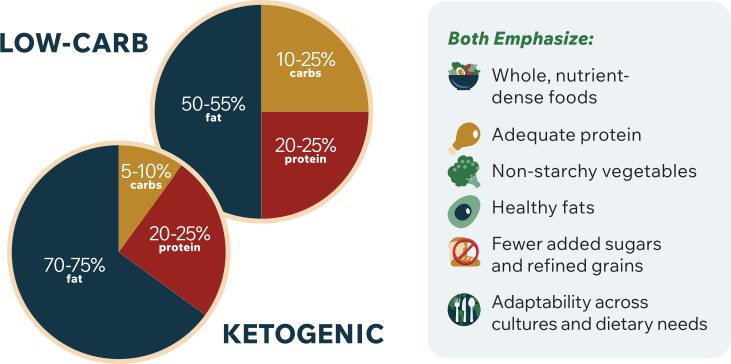
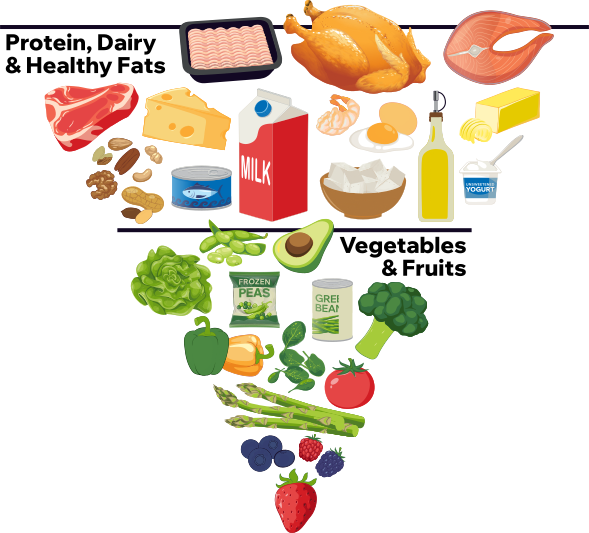
Our infographic explains what low-carbohydrate and ketogenic diets are and how they work to support metabolic health. It summarizes research on the benefits of therapeutic carbohydrate restriction across a range of chronic conditions, includes real-world evidence of healthcare savings, and addresses common concerns about low-carbohydrate and ketogenic nutrition.
To learn more about how nutrition interventions can complement or provide alternatives to GLP-1 medications, read our policy brief.
To explore the science behind the low-carbohydrate recommendation in the 2025-2030 Dietary Guidelines for Americans, watch our explainer video and read our evidence guide.
Randomized controlled trials and longitudinal studies show benefits across several conditions.
Beyond the conditions featured in the infographic, research has explored the use of low-carbohydrate and ketogenic diets across a growing number of disease areas. Additional evidence-supported conditions are highlighted below. References for both the infographic and the supplemental information on this page are listed below, organized by disease category.
Metabolic and Cardiovascular
- Obesity and overweight — associated with greater weight loss and reduced fat mass compared with low-fat diets across multiple randomized controlled trials
- Prediabetes — associated with improved glucose control, reduced HbA1c, and lower fasting glucose compared with usual diet in randomized controlled trials
- Type 2 diabetes — associated with improved glycemic control and remission in more than 50% of participants in longitudinal studies
- Type 1 diabetes — associated with improved glycemic control and reduced insulin requirements in clinical studies
- Metabolic syndrome — associated with improvements in all five diagnostic markers, including blood glucose, triglycerides, HDL, blood pressure, and waist circumference
- Cardiovascular risk factors — associated with lower triglycerides, higher HDL, lower blood pressure, and shifts toward less harmful LDL particles
Neurological and Psychiatric
- Epilepsy — associated with meaningful reductions in seizure frequency in children with drug-resistant epilepsy across randomized controlled trials and more than 100 years of clinical use
- Alzheimer’s disease — associated with improved cognitive function, daily living, and quality of life in multiple randomized controlled trials
- Parkinson’s disease — associated with improved motor and non-motor symptoms in randomized controlled trials
- Depression — associated with reduced depressive symptoms across multiple randomized controlled trials and remission in pilot trials
- Bipolar disorder — associated with improved mood, anxiety, and metabolic health in pilot trials
- Schizophrenia — associated with improved psychiatric and metabolic health in pilot trials
Women’s Health
- Polyendocrine metabolic ovarian syndrome (PMOS) — associated with higher ovulation rates, reduced testosterone levels, and improved insulin resistance compared with standard dietary interventions in randomized controlled trials
- PCOS/PMOS-related infertility — associated with restored ovulation and improved pregnancy rates in clinical studies
- Gestational diabetes — associated with safe maternal and fetal outcomes and reduced insulin use in clinical studies
Hepatic and Oncologic
- MASLD (metabolic dysfunction-associated steatotic liver disease) — associated with rapid reductions in liver fat and inflammation in randomized controlled trials and lower risk of disease progression in a large real-world study
- Cancer — associated with reduced blood glucose, lower insulin levels, improved treatment tolerance, and reduced tumor size when used alongside standard treatment in randomized controlled trials
References
References are organized by disease category and support both the infographic and the additional information presented on this page.
What Are Low-Carbohydrate and Ketogenic Diets? / How They Work
- Volek, J. S. (2025). A review of low-carbohydrate diets for weight loss, metabolic syndrome and type 2 diabetes. In The Scientific Foundation for the Dietary Guidelines for Americans, 2025–2030 (Appendix 4.5, pp.190-208).
Recognition in the Dietary Guidelines for Americans, 2025-2030
- U.S. Department of Agriculture & U.S. Department of Health and Human Services. (2025). Dietary Guidelines for Americans, 2025-2030.
Research-Backed Benefits of Low-Carb and Ketogenic Nutrition for Chronic Conditions
Obesity and overweight
- Leung, L. Y., Tam, H. L., & Ho, J. K. (2025). Effects of ketogenic and low-carbohydrate diets on the body composition of adults with overweight or obesity: A systematic review and meta-analysis of randomised controlled trials. Clinical Nutrition, 46, 10-18.
- Sackner-Bernstein, J., Kanter, D., & Kaul, S. (2015). Dietary intervention for overweight and obese adults: comparison of low-carbohydrate and low-fat diets. A meta-analysis.. PLOS ONE, 10(10), e0139817.
Prediabetes
- McKenzie, A. L., Athinarayanan, S. J., McCue, J. J., et al. (2021). Type 2 diabetes prevention focused on normalization of glycemia: a two-year pilot study. Nutrients, 13(3), 749.
- Dorans, K. S., Bazzano, L. A., Qi, L., et al. (2022). Effects of a low-carbohydrate dietary intervention on hemoglobin A1c: a randomized clinical trial. JAMA Network Open, 5(10), e2238645.
- Zoller, A. R., Athinarayanan, S. J., Van Tieghem, M. R., et al. (2026). Five-Year outcomes of a digitally delivered carbohydrate-reduced nutrition intervention for prediabetes: durability of diabetes prevention. Frontiers In Nutrition, 13, 1839029
Type 2 diabetes
- Volek, J. S. A review of low-carbohydrate diets for weight loss, metabolic syndrome and type 2 diabetes. In The Scientific Foundation for the Dietary Guidelines for Americans, 2025-2030 (Appendix 4.5, pp.190-208).
Type 1 diabetes
- Lennerz, B. S., Koutnik, A. P., Azova, S., et al. (2021). Carbohydrate restriction for diabetes: rediscovering centuries-old wisdom. The Journal of Clinical Investigation, 131(1), e142246.
- Sterner Isaksson, S., Ólafsdóttir, A. F., Ivarsson, S., et al. (2023). The effect of carbohydrate intake on glycaemic control in individuals with type 1 diabetes: a randomised, open-label, crossover trial. The Lancet Regional Health, Europe, 37, 100799.
Metabolic syndrome
- Zheng, Q., Gao, X., Ruan, X., et al. (2025). Are low carbohydrate diet interventions beneficial for metabolic syndrome and its components? A systematic review and meta-analysis of randomized controlled trials. International Journal of Obesity (2005), 49(7), 1252–1263.
- Volek, J. S. A review of low-carbohydrate diets for weight loss, metabolic syndrome and type 2 diabetes. In The Scientific Foundation for the Dietary Guidelines for Americans, 2025-2030 (Appendix 4.5, pp.190-208).
Cardiovascular risk factors
- Wang, Z., Chen, T., Wu, S., et al. (2024). Impact of the ketogenic diet as a dietary approach on cardiovascular disease risk factors: a meta-analysis of randomized clinical trials. The American Journal of Clinical Nutrition, 120(2), 294–309.
- Ghasemi, P., Jafari, M., Maskouni, S. J., et al. (2024). Impact of very low carbohydrate ketogenic diets on cardiovascular risk factors among patients with type 2 diabetes; GRADE-assessed systematic review and meta-analysis of clinical trials. Nutrition & Metabolism, 21(1), 50.
- Falkenhain, K., Roach, L. A., McCreary, S., et al. (2021). Effect of carbohydrate-restricted dietary interventions on LDL particle size and number in adults in the context of weight loss or weight maintenance: a systematic review and meta-analysis. The American Journal of Clinical Nutrition, 114(4), 1455–1466.
Epilepsy
- Martin-McGill, K. J., Bresnahan, R., Levy, R. G., et al. (2020). Ketogenic diets for drug-resistant epilepsy. The Cochrane Database of Systematic Reviews, 6(6), CD001903.
Alzheimer’s disease
- Phillips, M. C. L., Deprez, L. M., Mortimer, G. M. N., et al. (2021). Randomized crossover trial of a modified ketogenic diet in Alzheimer’s disease. Alzheimer’s Research & Therapy, 13(1), 51.
- Rong, L., Peng, Y., Shen, Q., et al. (2024). Effects of ketogenic diet on cognitive function of patients with Alzheimer’s disease: a systematic review and meta-analysis. The Journal of Nutrition, Health & Aging, 28(8), 100306.
Parkinson’s disease
- Krikorian, R., Shidler, M. D., Summer, S. S., et al. (2019). Nutritional ketosis for mild cognitive impairment in Parkinson’s disease: A controlled pilot trial. Clinical Parkinsonism & Related Disorders, 1, 41–47.
- Bohnen, J. L. B., Albin, R. L., & Bohnen, N. I. (2023). Ketogenic interventions in mild cognitive impairment, Alzheimer’s disease, and Parkinson’s disease: A systematic review and critical appraisal. Frontiers in Neurology, 14, 1123290.
- Phillips, M. C. L., Murtagh, D. K. J., Gilbertson, L. J., et al. (2018). Low-fat versus ketogenic diet in Parkinson’s disease: A pilot randomized controlled trial. Movement Disorders: Official Journal of the Movement Disorder Society, 33(8), 1306–1314.
Depression
- Janssen-Aguilar, R., Vije, T., Peera, M., et al. (2026). Ketogenic diets and depression and anxiety: A systematic review and meta-analysis. JAMA Psychiatry, 83(1), 13–22.
- Decker, D. D., Patel, R., Cheavens, J., et al. (2025). A pilot study examining a ketogenic diet as an adjunct therapy in college students with major depressive disorder. Translational Psychiatry, 15(1), 322.
- Brietzke, E., Fabe, J., Bambokian, A., et al. (2026). Medically supervised ketogenic diet as an adjunctive treatment for moderate to severe depression: A pilot study. Journal of Affective Disorders, 399, 121079.
Bipolar disorder
- Sethi, S., Wakeham, D., Ketter, T., et al. (2024). Ketogenic diet intervention on metabolic and psychiatric health in bipolar and schizophrenia: a pilot trial. Psychiatry Research, 335, 115866.
- Campbell, I. H., Needham, N., Grossi, H., et al. (2025). A pilot study of a ketogenic diet in bipolar disorder: clinical, metabolic and magnetic resonance spectroscopy findings. BJPsych Open, 11(2), e34.
- Sethi S, Berk, M., Andreazza, A.C., et al. (2026). Metabolic psychiatry targeting metabolic dysregulation in mental health. Nature Mental Health, 4, 508-520.
Schizophrenia
- Sethi, S., Wakeham, D., Ketter, T., et al. (2024). Ketogenic diet intervention on metabolic and psychiatric health in bipolar and schizophrenia: a pilot trial. Psychiatry Research, 335, 115866.
- Sethi S, Berk, M., Andreazza, A.C., et al. (2026). Metabolic psychiatry targeting metabolic dysregulation in mental health. Nature Mental Health, 4, 508-520.
Polyendocrine metabolic ovarian syndrome (PMOS)
- Pandurevic, S., Mancini, I., Mitselman, D., et al. (2023). Efficacy of very low-calorie ketogenic diet with the Pronokal® method in obese women with polycystic ovary syndrome: a 16-week randomized controlled trial. Endocrine Connections, 12(7), e220536.
- Khalid, K., Apparow, S., Mushaddik, I. L., et al. (2023). Effects of ketogenic diet on reproductive hormones in women with polycystic ovary syndrome. Journal of the Endocrine Society, 7(10), bvad112.
- Cincione, I. R., Graziadio, C., Marino, F., et al. (2023). Short-time effects of ketogenic diet or modestly hypocaloric Mediterranean diet on overweight and obese women with polycystic ovary syndrome. Journal of Endocrinological Investigation, 46(4), 769-777.
PMOS-related infertility
- Pandurevic, S., Mancini, I., Mitselman, D., et al. (2023). Efficacy of very low-calorie ketogenic diet with the Pronokal® method in obese women with polycystic ovary syndrome: a 16-week randomized controlled trial. Endocrine Connections, 12(7), e220536.
- Palafox-Gómez, C., Ortiz, G., Madrazo, I., et al. (2023). Adding a ketogenic dietary intervention to IVF treatment in patients with polycystic ovary syndrome improves implantation and pregnancy. Reproductive Toxicology 119, 108420.
Gestational diabetes
- Mijatovic, J., Louie, J. C. Y., Buso, M. E. C., et al. (2020). Effects of a modestly lower carbohydrate diet in gestational diabetes: a randomized controlled trial. The American Journal of Clinical Nutrition, 112(2), 284–292.
- Muneta, T., Hayashi, M., Nagai, Y., et al. (2023). Ketone bodies in the fetus and newborn during gestational diabetes and normal delivery. International Journal of Diabetes, 5(1), 157-163.
MASLD (metabolic dysfunction-associated steatotic liver disease)
- Holmer, M., Lindqvist, C., Petersson, S., et al. (2021). Treatment of NAFLD with intermittent calorie restriction or low-carb high-fat diet – a randomised controlled trial. Journal of Hepatology Reports: Innovation In Hepatology, 3(3), 100256.
- Cunha, G. M., Guzman, G., Correa De Mello, L. L., et al. (2020). Efficacy of a 2-month very low-calorie ketogenic diet (VLCKD) compared to a standard low-calorie diet in reducing visceral and liver fat accumulation in patients with obesity. Frontiers in Endocrinology, 11, 607.
- Athinarayanan, S. J., Wolfberg, A. J., Shanmugam, P. V., et al. (2026). Reduced risk of liver-related events among patients receiving individualized nutrition-focused remote care in the United States. Hepatology, 10.1097/HEP.0000000000001713. Advance online publication.
Cancer
- Salido-Bueno, B., Gil-Hernandez, E., Rueda-Ruzafa, L., et al. (2024). Effects of ketogenic diets on cancer-related variables: A systematic review and meta-analysis of randomised controlled trials. Nutrition Bulletin, 49(3), 264–277.
- Khodabakhshi, A., Akbari, M. E., Mirzaei, H. R., et al. (2021). Effects of ketogenic metabolic therapy on patients with breast cancer: A randomized controlled clinical trial. Clinical Nutrition, 40(3), 751–758.
- Cohen, C. W., Fontaine, K. R., Arend, R. C., et al. (2018). Favorable effects of a ketogenic diet on physical function, perceived energy, and food cravings in women with ovarian or endometrial cancer: A randomized, controlled trial. Nutrients, 10(9), 1187.
Higher-Risk Populations
- Centers for Disease Control & Prevention (CDC). (2026). National Diabetes Statistics Report.
- Centers for Disease Control & Prevention (CDC). (2024). Adult Obesity Facts.
- Gower, B. A., & Goss, A. M. (2015). A lower-carbohydrate, higher-fat diet reduces abdominal and intermuscular fat and increases insulin sensitivity in adults at risk of type 2 diabetes. The Journal of Nutrition, 145(1), 177S-183S.
U.S. Economic Impact of Chronic Disease
Diabetes – $413 billion/year
- Parker, E. D., Lin, J., Mahoney, T., et al. (2024). Economic costs of diabetes in the U.S. in 2022. Diabetes Care, 47(1), 26-43.
Heart disease – $422 billion/year
- Martin, S. S., Aday, A. W., Almarzooq, Z. I., et al. (2024). 2024 heart disease and stroke statistics: A report of U.S. and global data from the American Heart Association. Circulation, 149(8), e347-e913.
Obesity – $1.3 trillion/year
- Lopez, C., Bendix, J., & Sagynbekov, K. (2020). Weighing down America: 2020 update: A community approach against obesity. Milken Institute.
Real-World Savings
7,500 patients; $929-$1,700 annual savings per patient
- Athinarayanan, S. J., Adams, R. N., Hallberg, S. J., et al. (2019). Long-term effects of a novel continuous remote care intervention including nutritional ketosis for the management of type 2 diabetes: A 2-year non-randomized clinical trial. Frontiers in Endocrinology, 10, 348.
- Buchanan, L., Calkins, M., Kalayjian, T., et al. (2025). TOWARD, a metabolic health intervention, demonstrates robust 1-year weight loss and cost-savings through deprescription. Frontiers in Nutrition, 12, 1548609.
- Shanmugam, P. V., Adams, R. N., Athinarayanan, S. J., et al. (2026). Impact of telehealth nutrition therapy on costs and utilization in type 2 diabetes and obesity: a retrospective claims-based analysis. medRxiv (preprint).
- Strombotne, K. L., Lum, J., Pizer, S. D., et al. (2024). Clinical effectiveness and cost-impact after 2 years of a ketogenic diet and virtual coaching intervention for patients with diabetes. Diabetes, Obesity & Metabolism, 26(3), 1016–1022.
Common Concerns
Heart health
- Wang, Z., Chen, T., Wu, S., et al. (2024). Impact of the ketogenic diet as a dietary approach on cardiovascular disease risk factors: a meta-analysis of randomized clinical trials. The American Journal of Clinical Nutrition, 120(2), 294–309.
- Falkenhain, K., Roach, L. A., McCreary, S., et al. (2021). Effect of carbohydrate-restricted dietary interventions on LDL particle size and number in adults in the context of weight loss or weight maintenance: a systematic review and meta-analysis. The American Journal of Clinical Nutrition, 114(4), 1455–1466.
- Ghasemi, P., Jafari, M., Maskouni, S. J., et al. (2024). Impact of very low carbohydrate ketogenic diets on cardiovascular risk factors among patients with type 2 diabetes; GRADE-assessed systematic review and meta-analysis of clinical trials. Nutrition & Metabolism, 21(1), 50.
- Sackner-Bernstein, J., Kanter, D., & Kaul, S. (2015). Dietary intervention for overweight and obese adults: Comparison of low-carbohydrate and low-fat diets. A Meta-Analysis. PLOS ONE, 10(10), e0139817.
- Volek, J. S., Yancy, W. S., Jr, Gower, B. A., et al. (2024). Expert consensus on nutrition and lower-carbohydrate diets: An evidence- and equity-based approach to dietary guidance. Frontiers in Nutrition, 11, 1376098.
Kidney function
- Tirosh, A., Golan, R., Harman-Boehm, I., et al. (2013). Renal function following three distinct weight loss dietary strategies during 2 years of a randomized controlled trial. Diabetes Care, 36(8), 2225–2232.
- Volek, J. S., Yancy, W. S., Jr, Gower, B. A., et al. (2024). Expert consensus on nutrition and lower-carbohydrate diets: An evidence- and equity-based approach to dietary guidance. Frontiers in Nutrition, 11, 1376098.
Clinical supervision
- Volek, J. S., Yancy, W. S., Jr, Gower, B. A., et al. (2024). Expert consensus on nutrition and lower-carbohydrate diets: An evidence- and equity-based approach to dietary guidance. Frontiers in Nutrition, 11, 1376098.